
Plate Heat Exchanger
-
Environmental measures with deodorizing equipment (air preheater for catalytic deodorizing equipment)
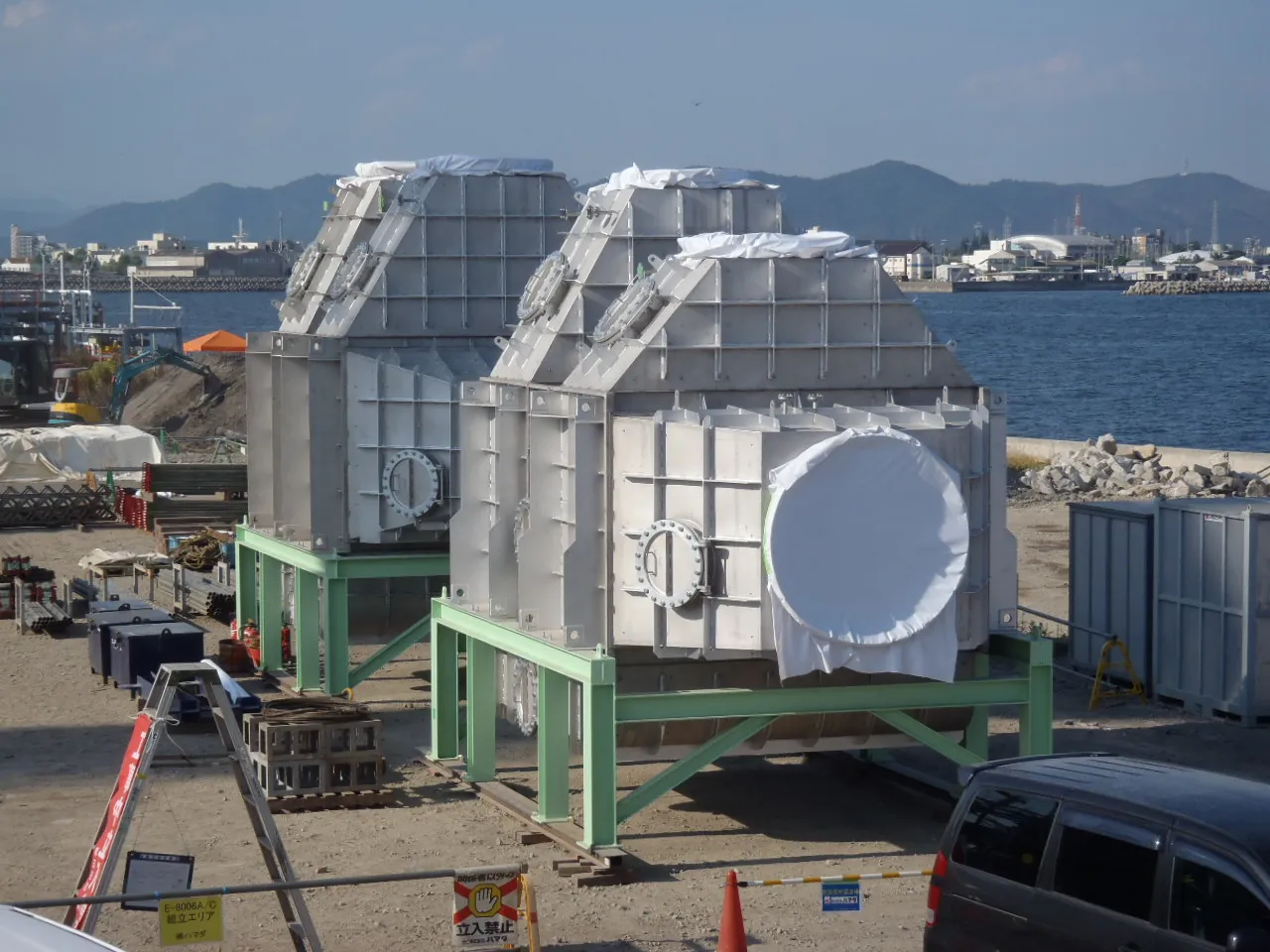
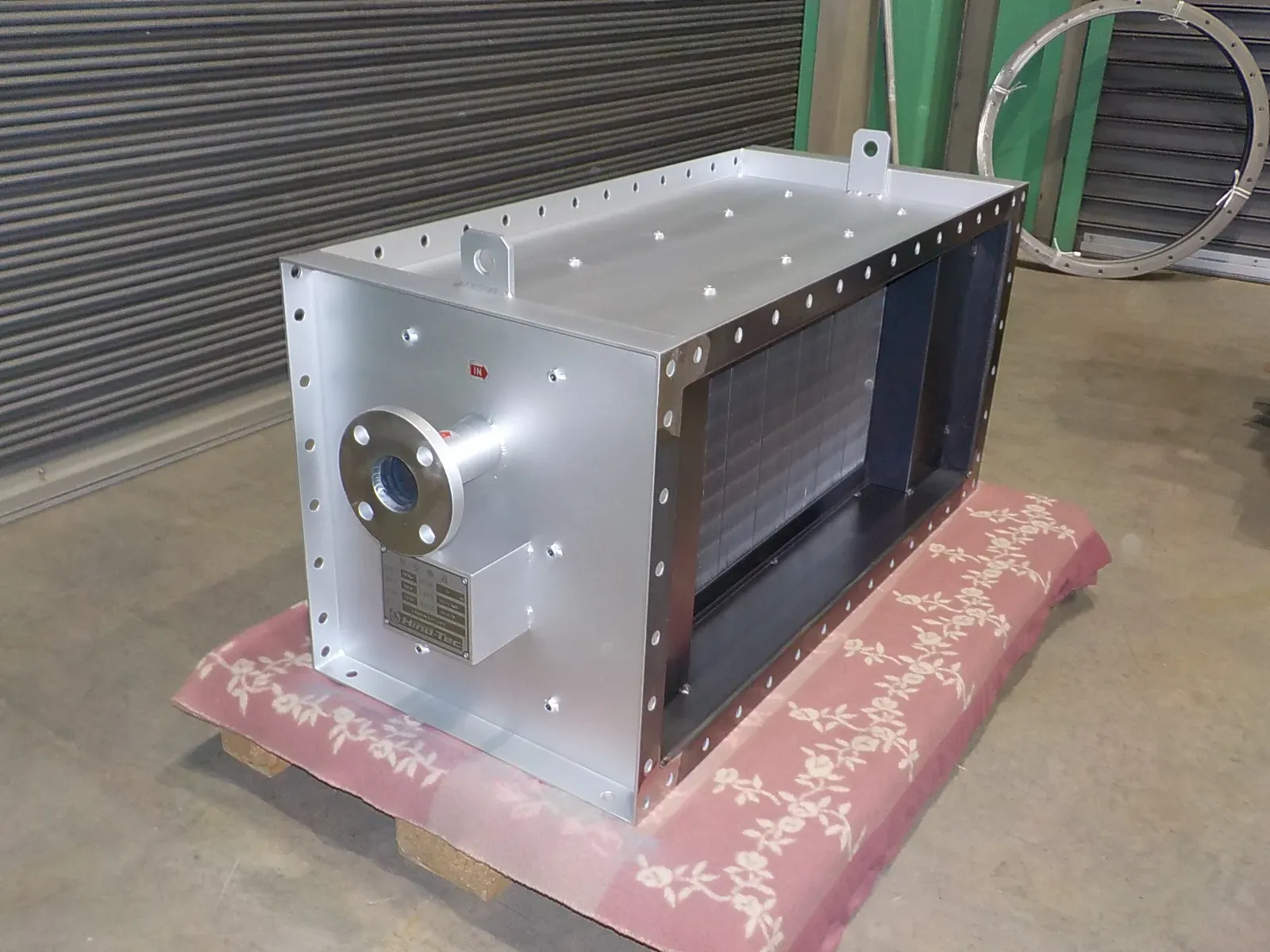
In recent years, large amounts of odorous gases are generated during the manufacturing process at chemical production facilities, which are increasing in number overseas, in particular. Releasing odorous gases directly into the air creates a foul odor, so strict regulations have been put in place. Heated odorous gases are decomposed by oxidation when exposed to a precious metal catalyst, achieving a deodorizing effect, and this heat exchanger is used to heat these odorous gases. Hino-tec’s plate heat exchangers incorporate innovative materials to prevent corrosion by odorous gases, making them useful for environmental measures around the world.
-
Pressure-resistant plate heat exchanger
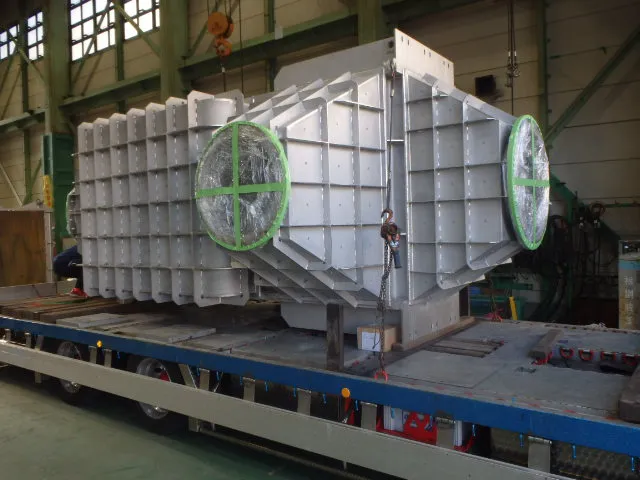
By installing reinforcing ribs on the outer surface of the casing and reinforcing the element section to withstand pressure, it is possible to design a pressure-resistant plate heat exchanger up to 50 kPa.
-
Drying without uneven paint (indirect hot air generator)
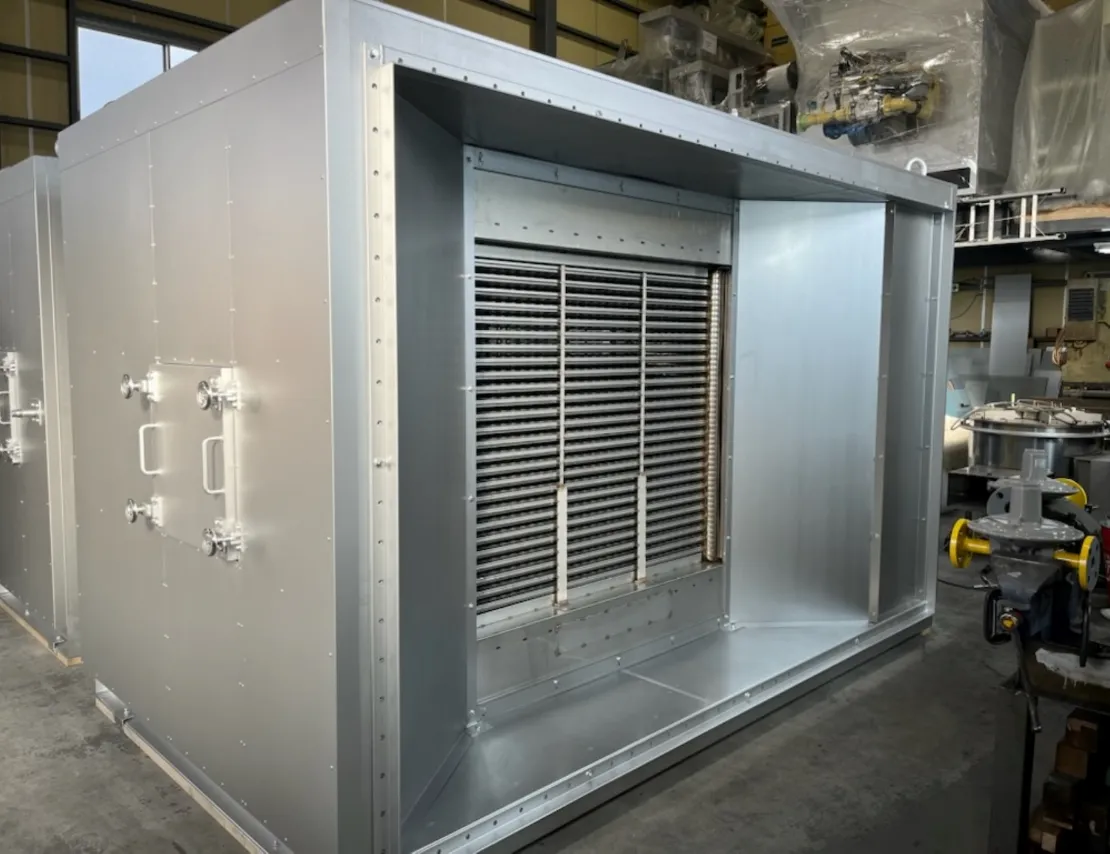
The reason why car bodies are painted so beautifully is because they use indirectly heated air rather than direct fire. HINO-TEC’s indirect hot air generator circulates exhaust gases, making it energy-efficient and highly efficient. It is useful not only for cars, but also for various other drying booths.
-
EO exhaust gas treatment equipment
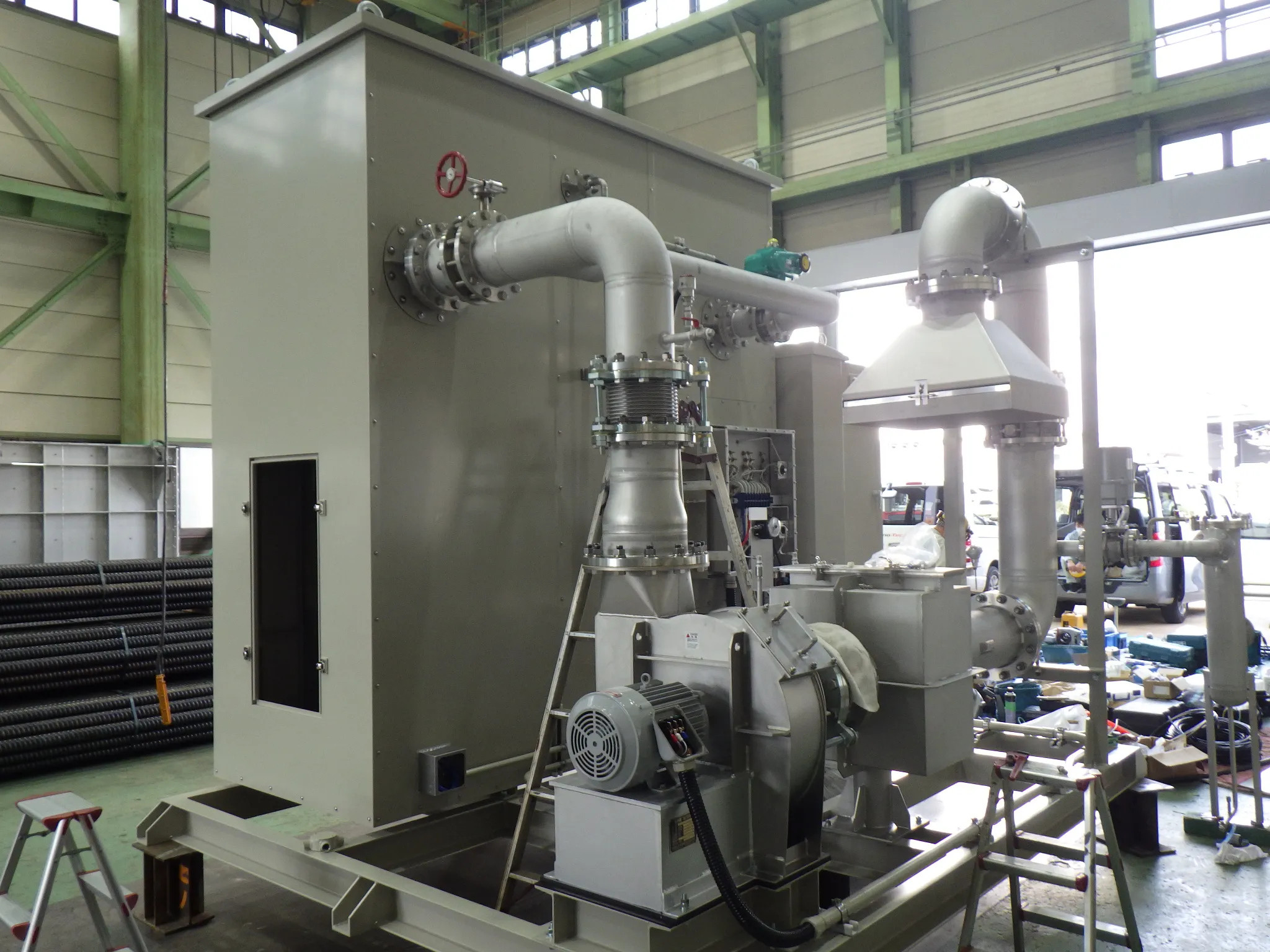
EO (ethylene oxide) gas has strong germicidal properties and is used to sterilize sanitary products such as medical equipment and cosmetics. However, it is highly toxic to the human body and is therefore dangerous. A device combining a HINO-TEC plate heat exchanger and a catalyst is used to neutralize this EO gas and release it into the atmosphere.
Square Tube Heat Exchanger
-
For cooling high-temperature gas (gas cooler)
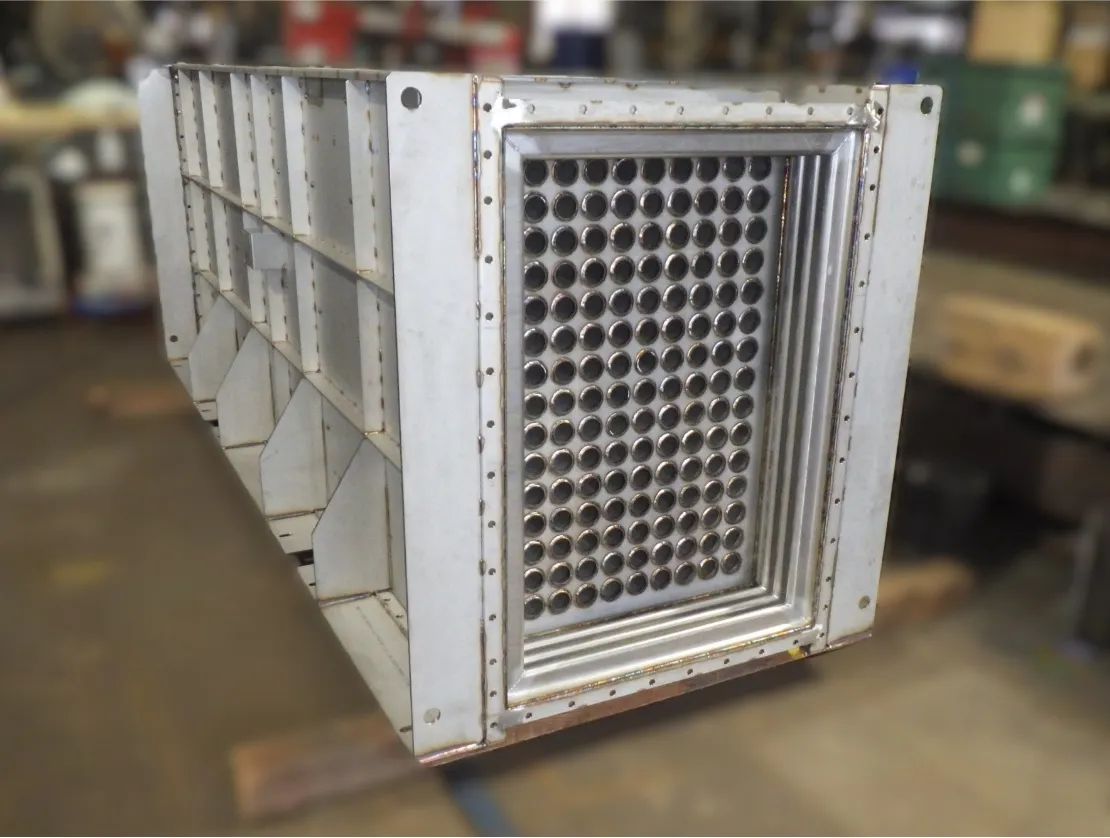
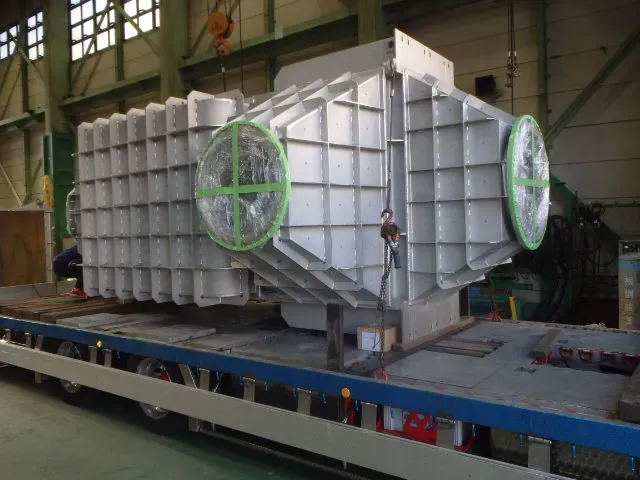
There are many different types of industrial furnaces, but they all have one thing in common: they emit high-temperature exhaust gases.
The exhaust gases containing dust are first cooled to remove the dust before being released into the air.
Since the temperature is also lowered, this is also an effective measure against global warming. -
A companion to high-temperature deodorizing equipment (heat exchanger for direct combustion deodorizing equipment)
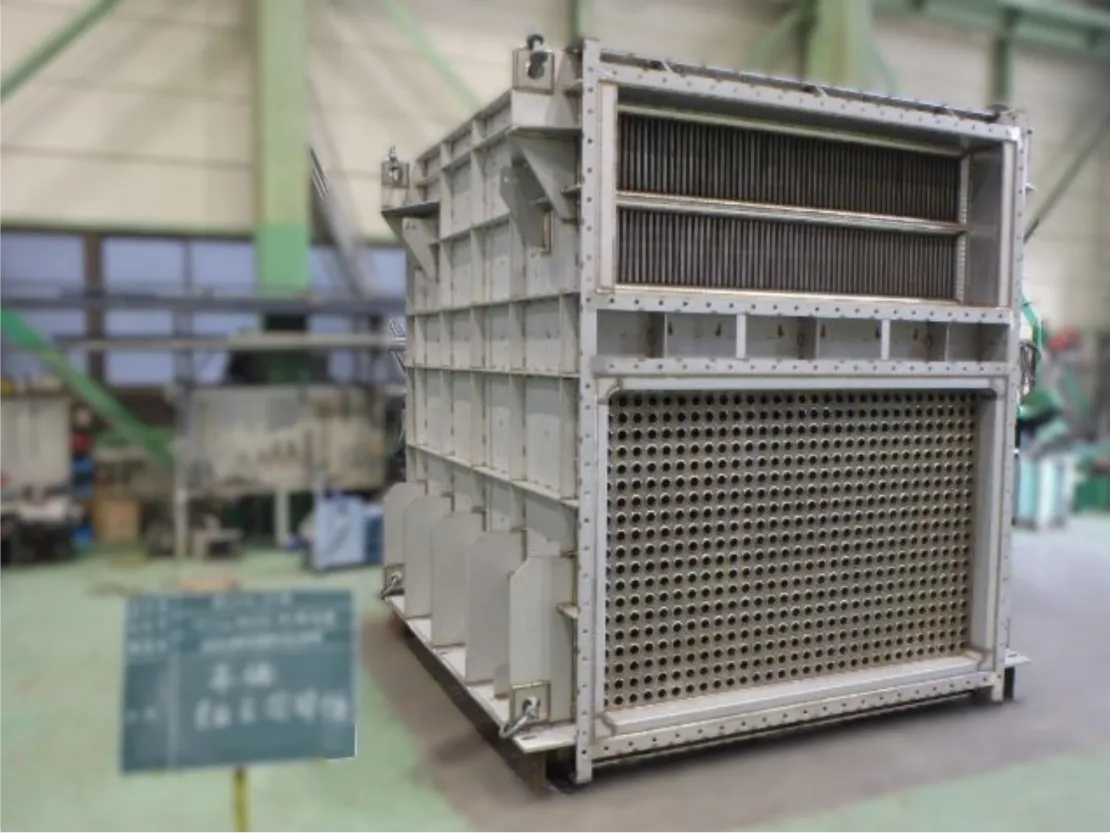
Direct combustion deodorizers use high temperatures to break down odorous gases.
This heat exchanger is designed to preheat the gas using the exhaust heat generated after deodorizing the odorous gas in order to save energy.
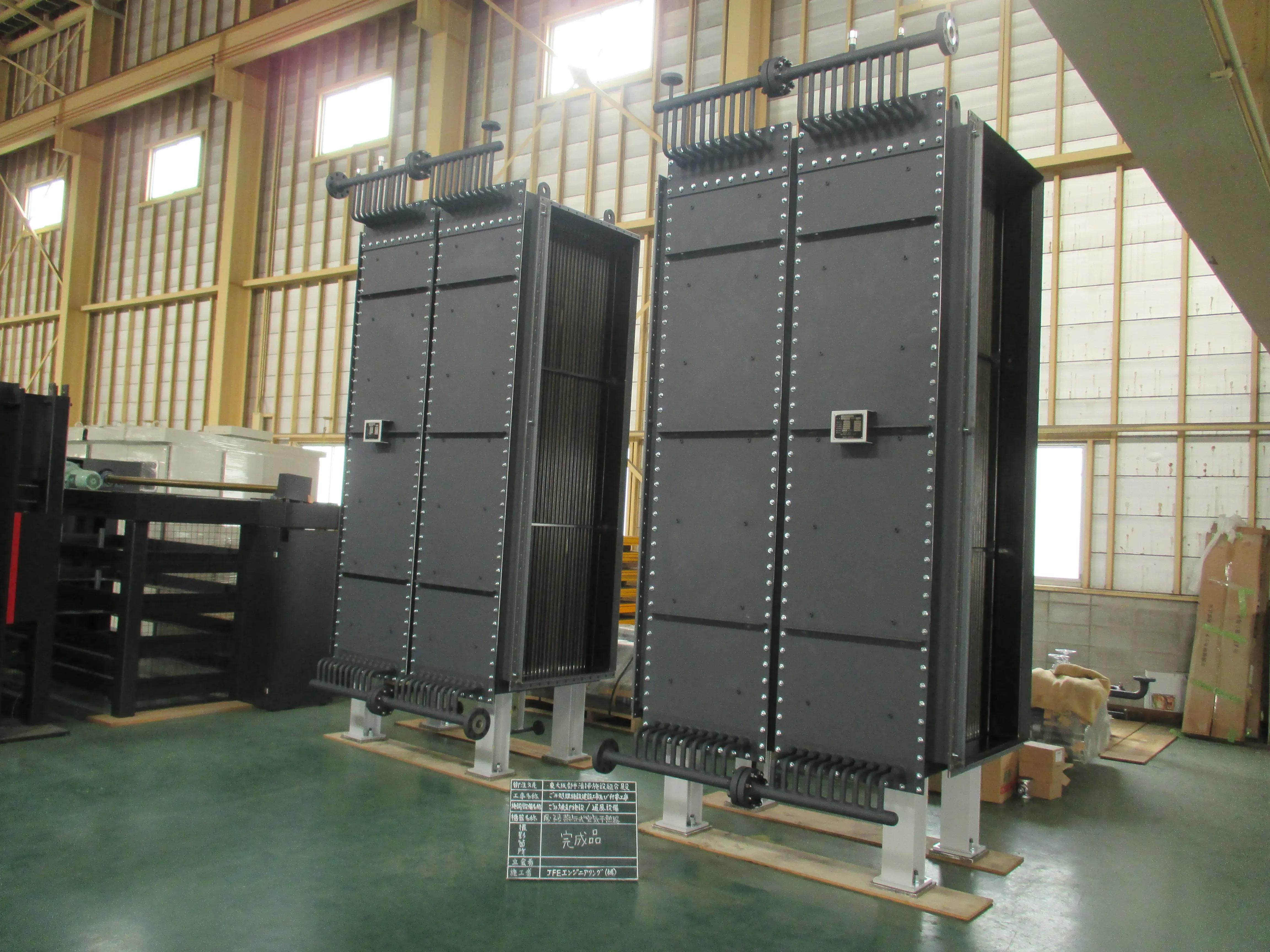
This product is a combination of a “plate type” and a “square tube type.”
Normal direct combustion deodorizers use a “plate type,” but this one uses both a “plate type” and a “square tube type” because the goal was to recover high temperatures.
Normally, with only the “plate type,” the standard recovery temperature is 500°C, but by using it in combination with the “square tube type,” it is possible to recover temperatures of “over 500°C.” -
For preheating combustion air in incinerators (using exhaust gas)
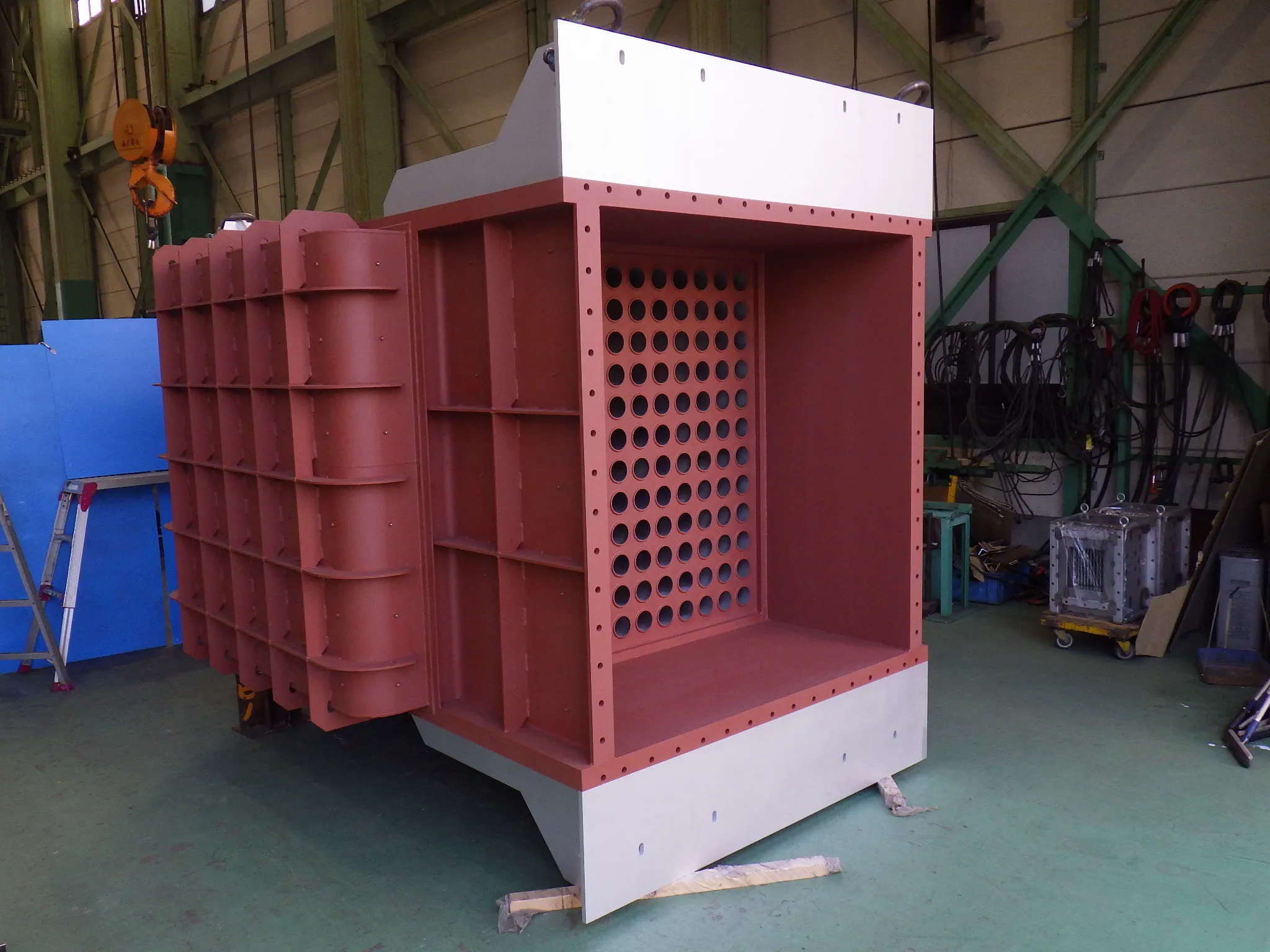
In waste incinerators, the combustion state changes depending on the moisture content of the waste. If the moisture content is high, the waste is difficult to burn and more fuel is required, making it uneconomical. By passing the waste through a combustion air preheater, a stable temperature can be supplied to the incinerator, resulting in energy savings.
Shell and Tube Heat Exchanger
-
For incineration of sewage sludge (air preheater)
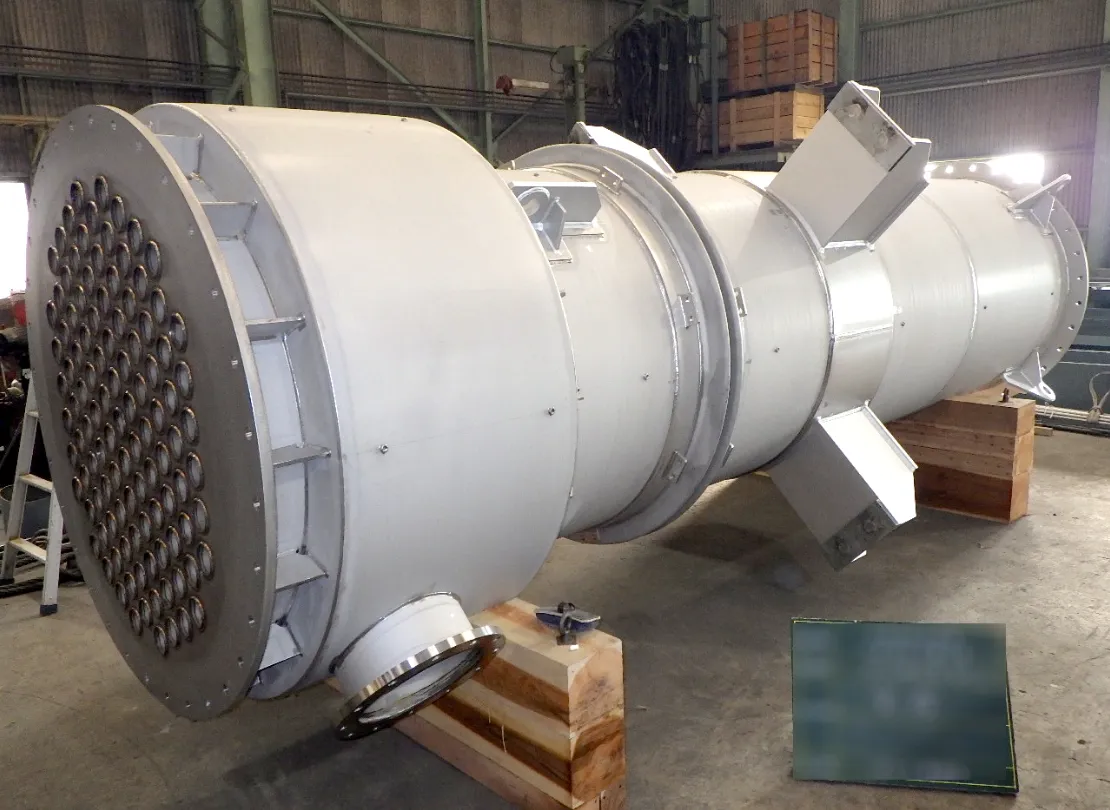
This heat exchanger makes effective use of the high-temperature exhaust gas generated during sewage sludge incineration. High-temperature exhaust gas flows through the tubes (heat transfer pipes), and fresh air flows through the shell (body) to preheat the air.
By feeding the preheated air into the incinerator, it helps increase the temperature inside the furnace, leading to improved incineration efficiency. -
For recovering high-temperature water (hot water generator)
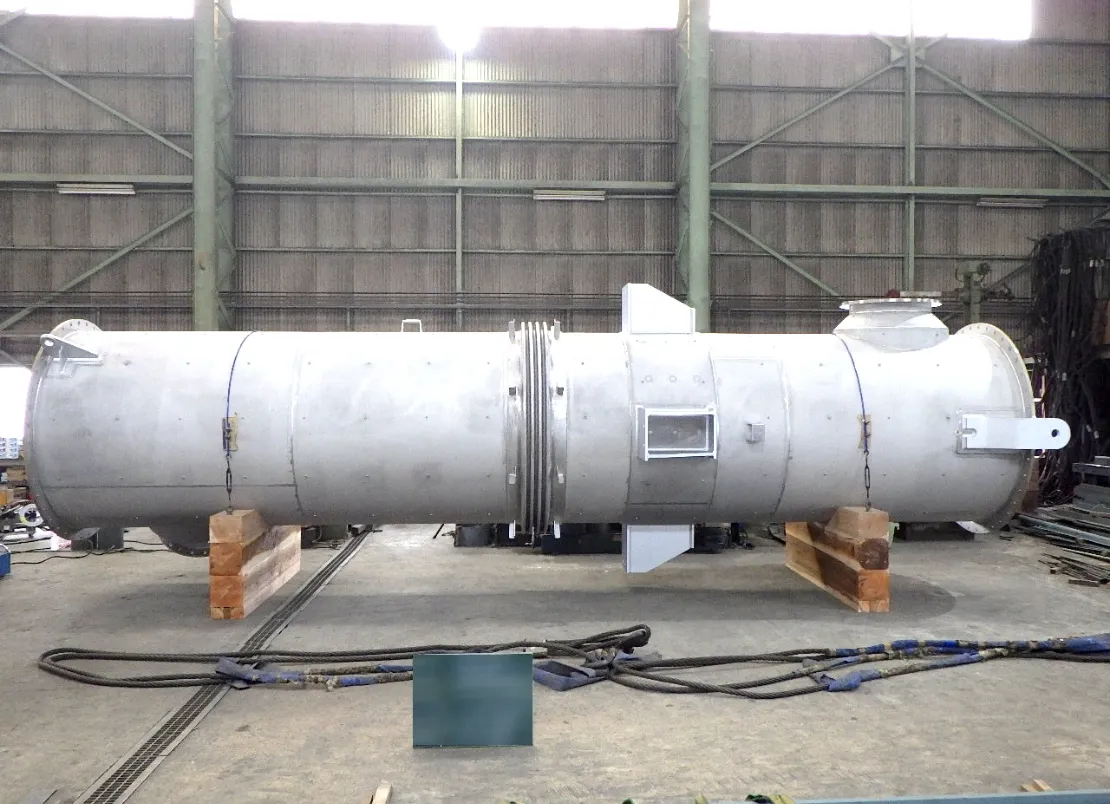
This type is used when recovering hot water for boiler feed using dusty exhaust gas. Because water flows through the shell side, the surface temperature does not get too high, making it safe to use.
Finned Tube Heat Exchanger
-
Compact and high performance!! (Hot water generator)
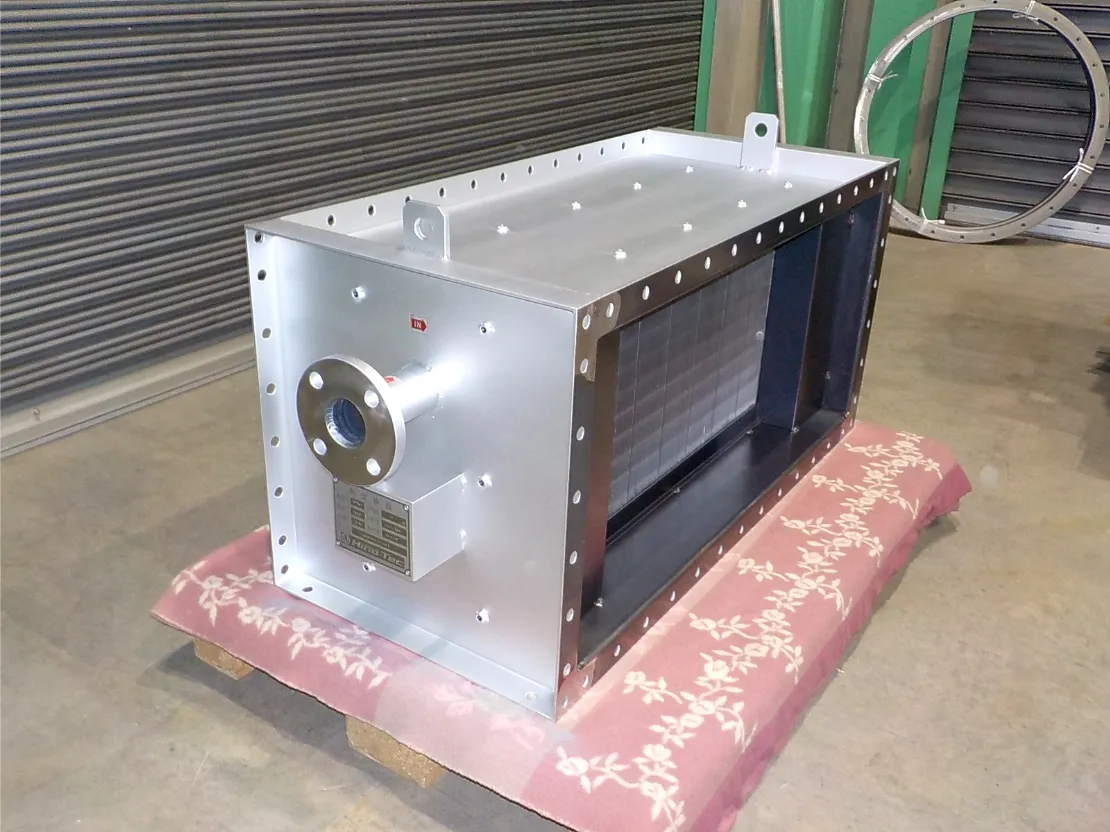
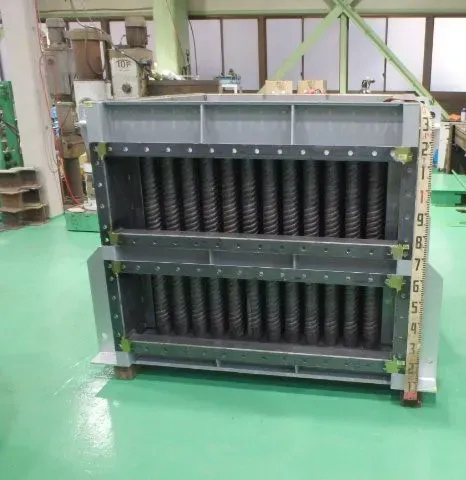
A finned tube heat exchanger is a device that attaches plate-shaped fins to heat transfer tubes, allowing heat to be exchanged using both bare and finned tubes.
This means that the space required to secure the same heat transfer area is significantly smaller than with a bare tube heat exchanger, making it a high-performance product that meets the need for miniaturization.
This product is a “plate” finned tube heat exchanger.
In this case, heated air is used as a heat source to extract hot water. The optimal fins are selected based on the fluid conditions such as temperature and pressure. -
Strength increased with welded fins
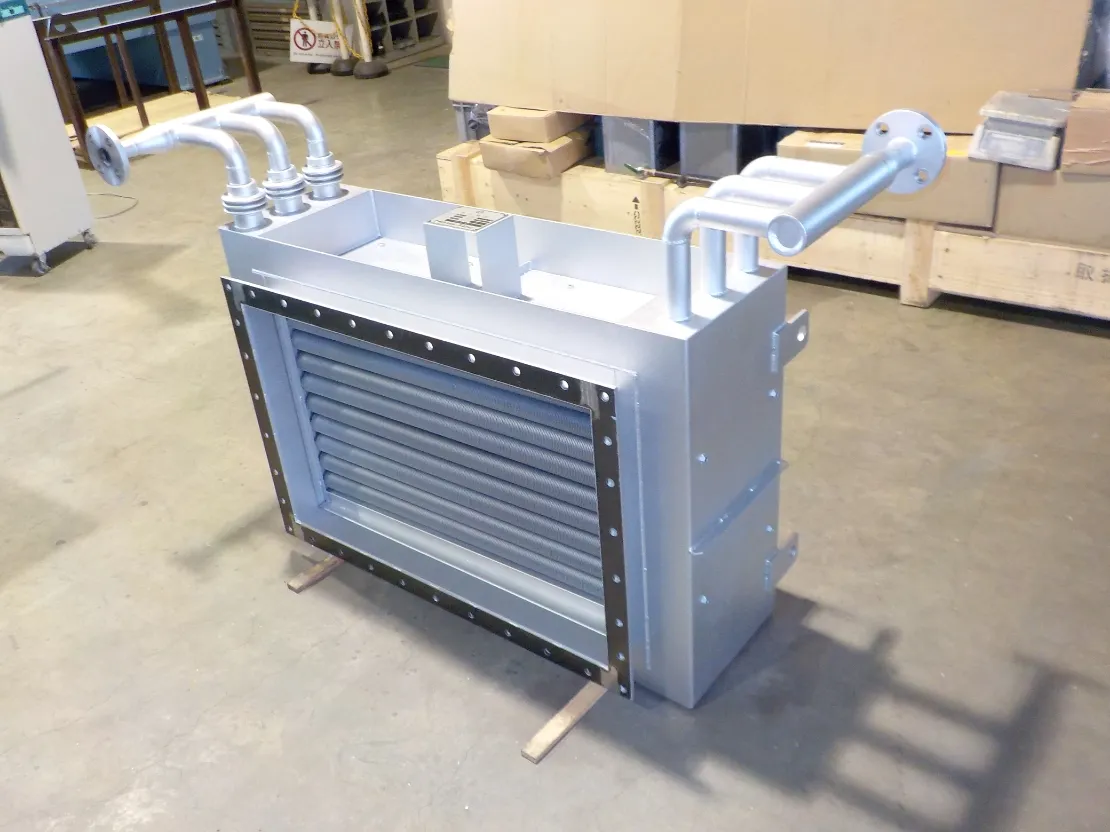
The fin material is wrapped around the tube using high frequency resistance welding, making it extremely strong.It can be used in high temperature ranges that plate fin tubes cannot handle.
Superheated Steam Heat Exchanger
-
For preheating combustion air in incinerators (using boilers)
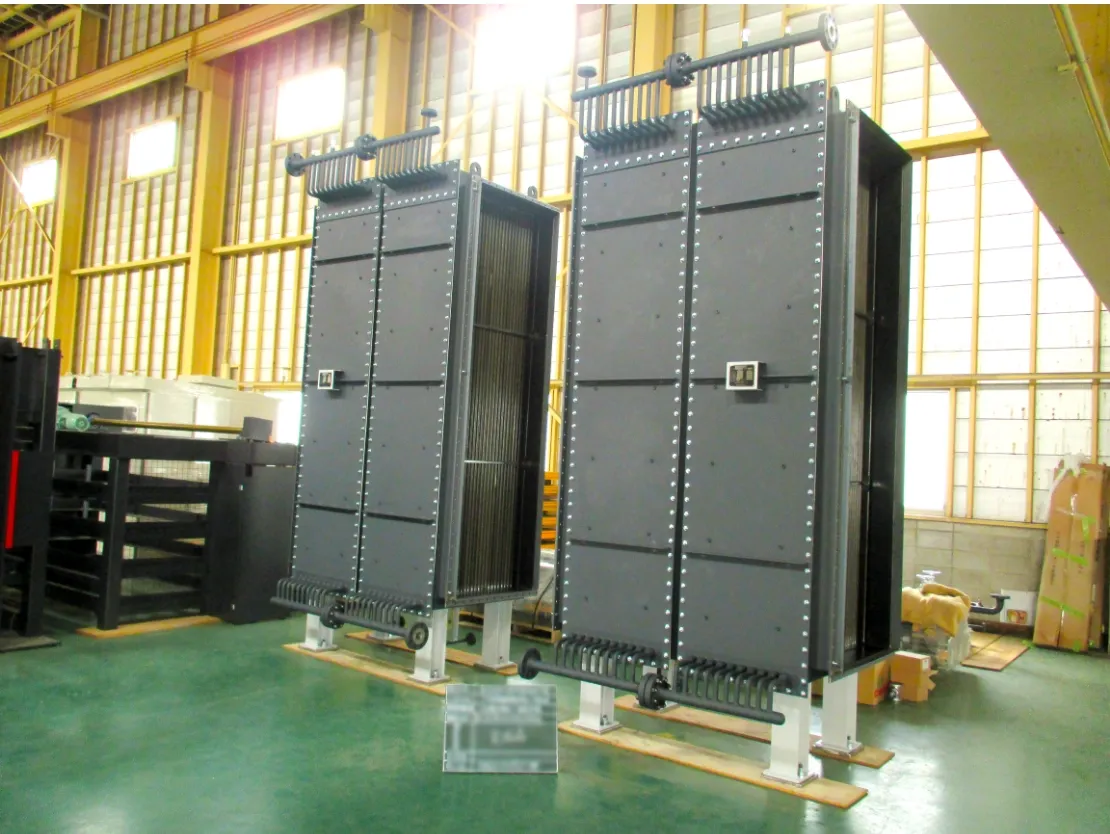
Municipal waste incineration facilities use boilers to generate electricity, and can reduce fuel consumption by using excess steam to preheat the air needed to burn the waste.
-
Creating peace of mind through appearance (air preheater to prevent white smoke)
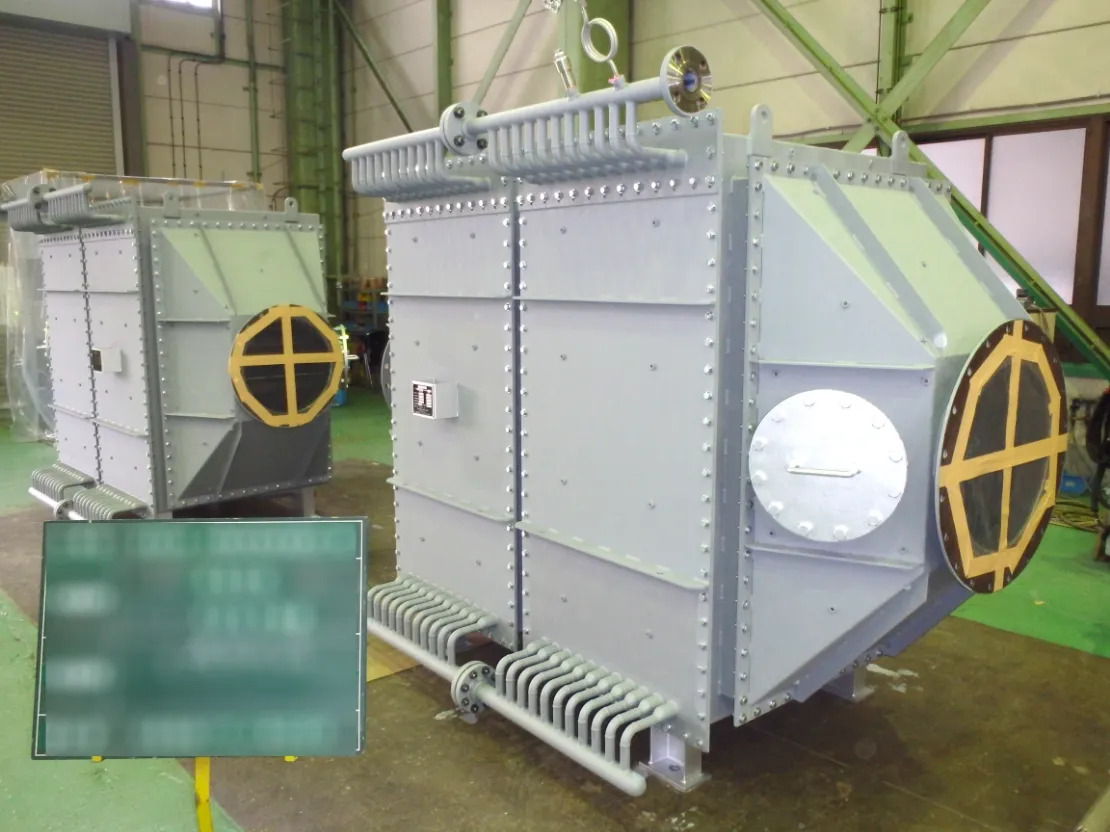
At the clean center, the final treated exhaust gas is discharged from the chimney. Because exhaust gas contains a lot of moisture, it cools in the air when it comes out of the chimney and turns into a white, fluffy cloud.
Since this cloud has been treated, it is just clean water vapor, but complaints are flooding in that it looks unattractive.
For this reason, by mixing the exhaust gas with air that has been heated in an air preheater to prevent white smoke before it is discharged from the chimney, the moisture is diluted and the temperature is raised, making the white cloud transparent.
Others
-
Powder Transfer System
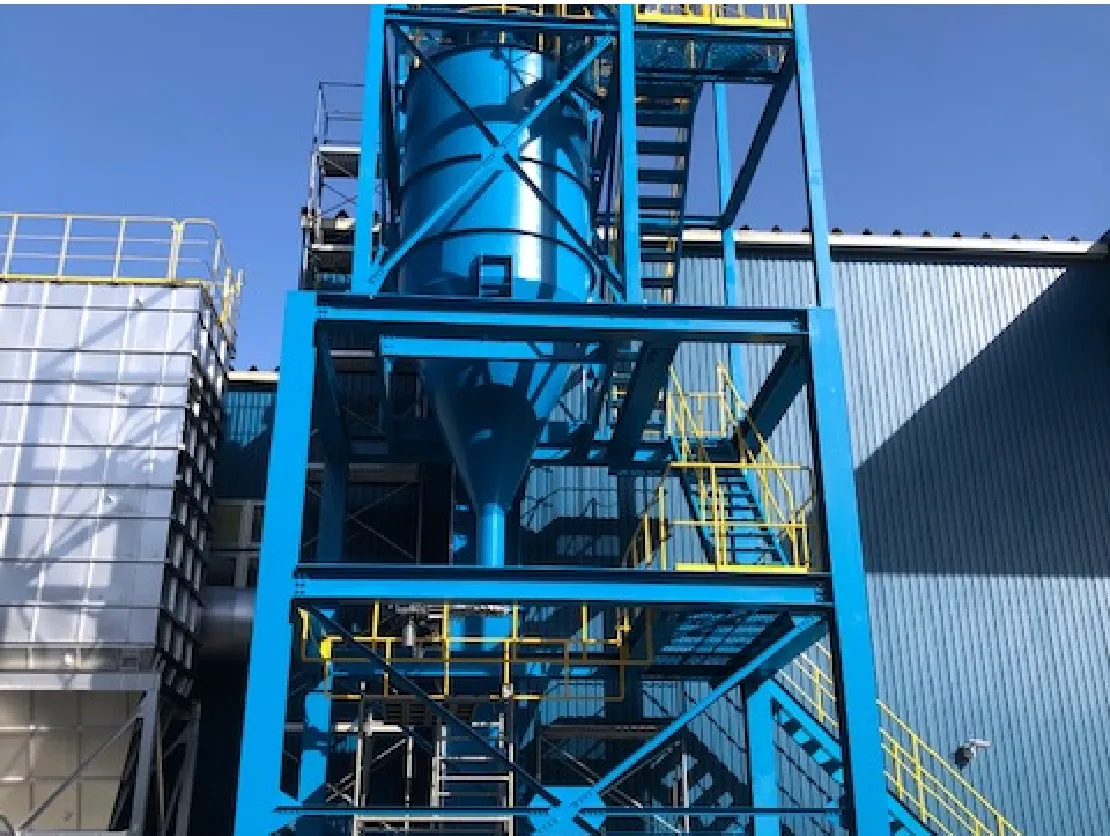
Powder is transported to the silo using multiple conveyors and bucket elevators. A vibrating sieve is used to extract powder of the required fineness.
-
Condenser
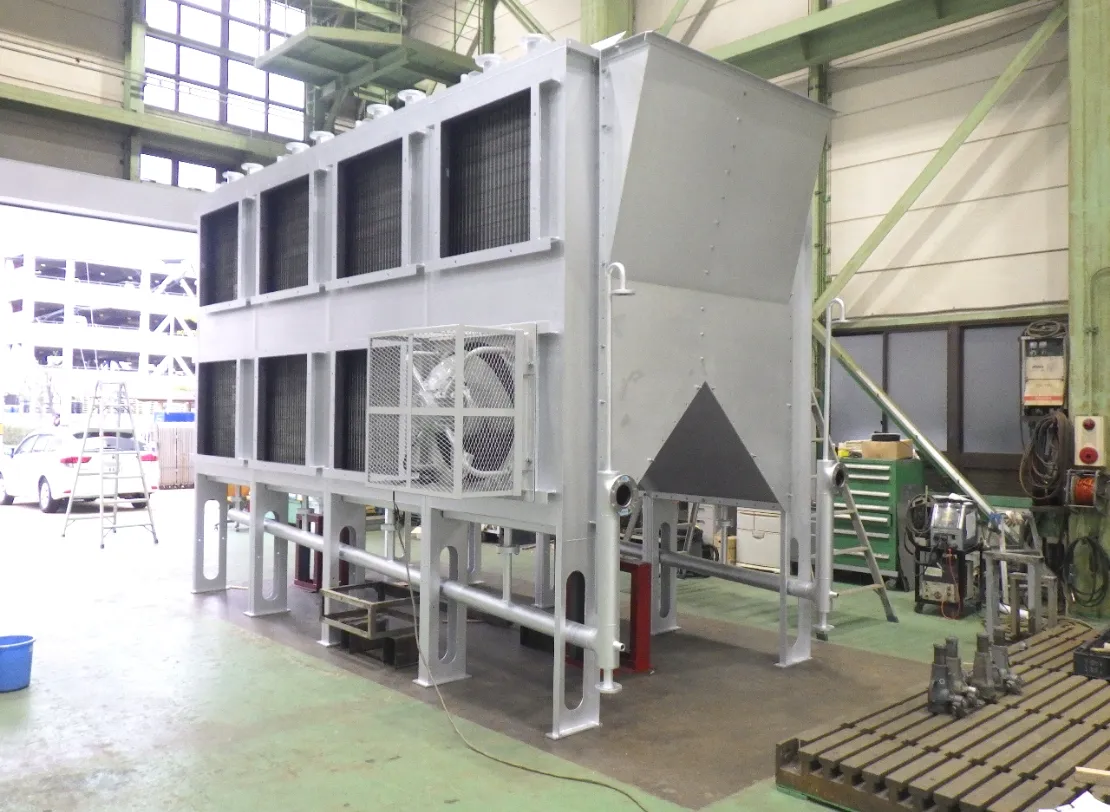
This fan-equipped heat exchange system reduces the hassle of your arrangements. This equipment cools and condenses steam with air, but we also consider installing fans in other equipment depending on the conditions.